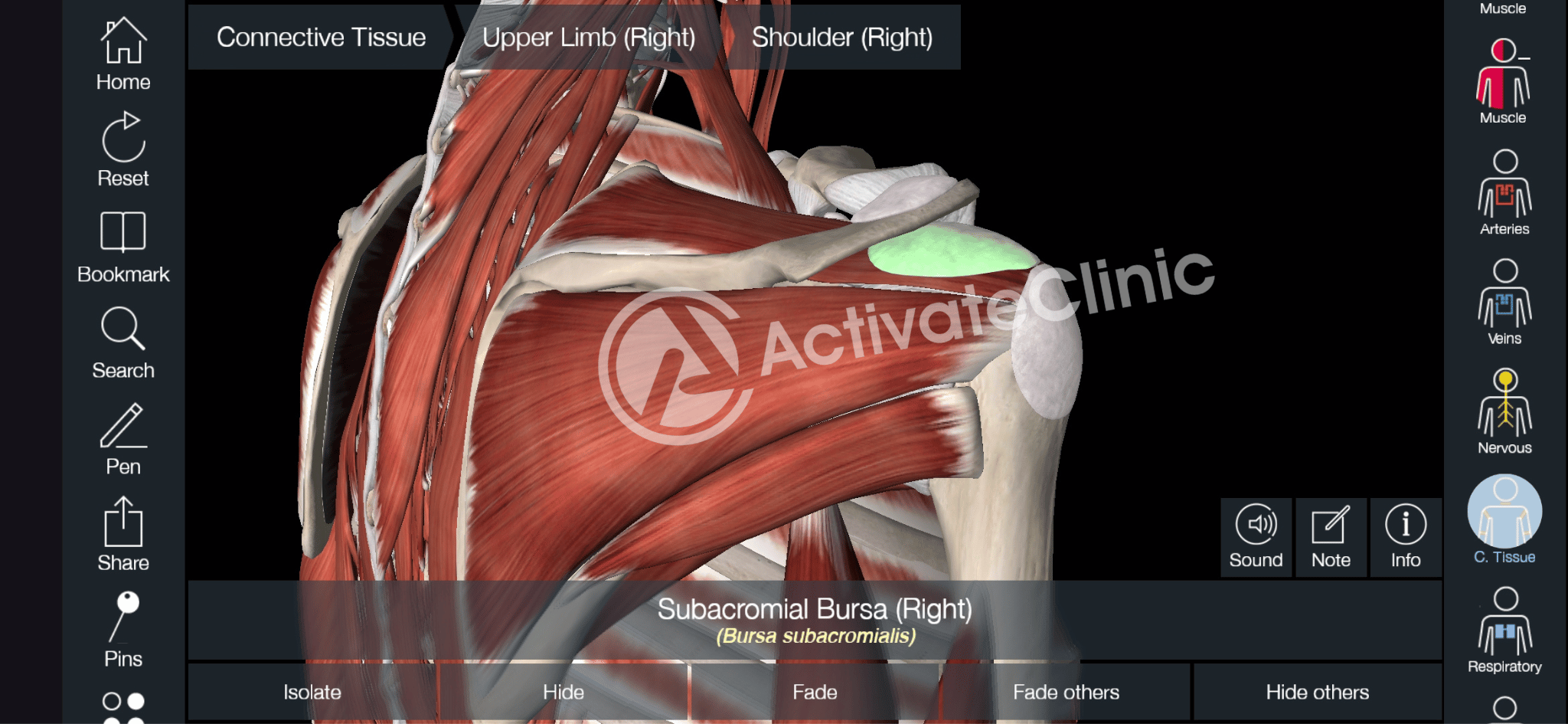
Guide to Treatment for Subacromial Bursitis

Subacromial Bursitis Overview Shoulder pain can be a persistent and disruptive problem, affecting everything from reaching into a cupboard to getting a good night’s sleep. One of the most common causes of this discomfort is subacromial bursitis. At Activate Clinic, we understand how frustrating this condition can be, which is why we offer a natural, […]

A Guide To Frozen Shoulder Treatment

Frozen shoulder can be a frustrating and painful condition, limiting your ability to perform even simple daily tasks. This gradual stiffening of the shoulder joint can significantly impact your quality of life. At Activate Clinic, we offer a natural, exercise-based program designed to guide you through recovery and help you regain full function. This article will explain the symptoms of frozen shoulder, outline traditional treatments, and detail our supportive, four-stage approach to helping you move freely again.   What is Frozen Shoulder? Frozen shoulder, medically known as adhesive capsulitis, is a condition where the shoulder capsule—the connective tissue surrounding the shoulder joint—becomes thick, tight, and inflamed. This process restricts movement, causing significant pain and stiffness. The exact cause is not always clear, but it can develop after an injury or period of immobilisation.   Common Symptoms People experiencing frozen shoulder typically notice a few key symptoms:   Persistent Shoulder Pain: A dull or aching pain, often worse at night and with movement. Progressive Stiffness: A gradual loss of motion in the shoulder joint, making it difficult to lift your arm. Limited Range of Motion: Difficulty with activities like reaching overhead, fastening a seatbelt, or dressing. The condition usually progresses through three phases:   Freezing Stage: Pain increases, and your shoulder's range of motion starts to become noticeably limited. This can last from weeks to months. Frozen Stage: Pain may begin to diminish, but stiffness becomes more pronounced. Using your shoulder becomes very difficult. This stage can last for several months. Thawing Stage: The range of motion slowly begins to improve. [...]

Shoulder Surgery Recovery: Expert Exercise Physiology for Post-Op Rehab at Activate Clinic

Introduction A shoulder injury can be one of the toughest to manage, impacting everything from simple daily tasks to overall quality of life. Living with limited shoulder function often brings pain, frustration, and challenges. For severe cases, surgery might be the best solution—and while it’s a big decision, many patients see significant improvements post-op. However, the true key to success lies in individualized rehabilitation. The most common post-op shoulder surgery we see at Activate Clinic involve rotator cuff repair mainly of the supraspinatus tendon however the rehab protocols are quite similar for any shoulder surgery. Longer term injuries generally have a greater challenge during rehabilitation as muscles can become tighter and poor mechanics can develop the longer you live with an injured shoulder. The Early Weeks Post-Surgery: Rest, Recovery, and a Sling The first six weeks after surgery usually require wearing a sling most of the day to protect the shoulder and limit movement. During this initial phase, rehab options are minimal, and one of the main challenges is achieving restful sleep while avoiding unnecessary strain on the shoulder. This time is about giving your shoulder the rest it needs to heal, while you also have to avoid overloading the unaffected shoulder which will be working double time. Building Mobility: Weeks 6-10 By the six-week mark, you’ll be ready to start gentle rehabilitation exercises. This stage focuses on assisted range of motion to gradually activate your muscles in a safe, controlled way. While your surgeon may provide a standard exercise sheet, we’ve found that our individualised rehab method at Activate […]

Our 4 best shoulder rehab tips

After many years of battling against stubborn shoulder injuries, I wanted to share with you some tips we have learned over the years to get the most out of your shoulder therapy. Tip 1: Go HardA shoulder injury isn’t something that you should ignore. For a few, rest will be enough to get rid of the pain, but resting doesnt solve the reason the injury happened in the first place. Please don’t just do nothing, the sooner you start the process the easier it will be! Getting it sorted right now will result in: less total time spent on rehab less total pain endured less sleepless nights less medical expenses Tip 2: You need to maintain your range of motionDon’t just avoid movements that once were painful. Most people should avoid loaded movements at painful ranges, but not all movements. Often we see clients who have avoided lifting their arms above their head due to the pain they feel. If the muscles don’t go through their full range of motion often, they will shorten & tighten and make it more difficult to restore their length & flexibility later.Always keep working on your range of motion and we can help you figure out the best way for you to do that.Tip 3: Work out the movements that are aggrevatorsYou don’t necessarily need to avoid these movements but learning which movements in the “real world” (your normal life outside the clinic) could aggrevate your injury will help you (and us) figure out which movements require more strengthening at later stages of your recovery.Tip 4: Don’t use heat before bedIt’s […]

Handbags & Shoulder Injuries

We are dealing with shoulder injuries and pain regularly in our clinic, and it's natural to wonder what the possible causes might be. Shoulder injuries & pain can often seem to appear out of thin air with no known trigger. After discussion with a few of our female patients suffering with shoulder injuries, it had me wondering whether their handbags could be part of the problem. There are a variety of different shoulder injuries that are most common, so we're just going to keep the subject very broad and general here. I recommend that you get your specific case investigated in a one-on-one setting. We commonly see poor shoulder mechanics combined with poor scapular stability in patients with chronic shoulder pain. Poor mechanics usually involve several years of poor technique that eventually culminates in an improper motor pattern being created and then repeated over and over again. It's possible that one of those poor pattern creating activities is carrying a handbag. If you walk through a busy shopping centre or through the CBD you will notice an abundance of people carrying hand bags on their shoulders. This practice is not restricted to women but females would likely make up the greater proportion at risk.   The Handbag Trap The best default posture for your shoulders are for them to be "back and down." People presenting with persisting shoulder injuries tend to have compromised posture where the shoulders are anteriorly pulled due to weakness in the posterior shoulder muscles. If you were to carry a bag with a shoulder strap and keep your shoulders [...]